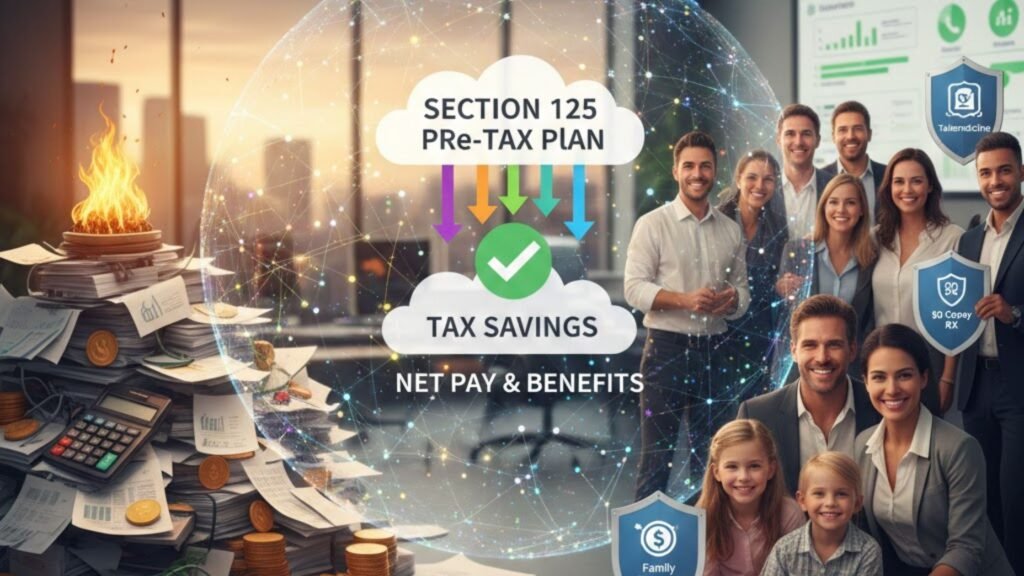
A Section 125 cafeteria plan might sound complicated, but it’s really just a smarter way for employers to offer benefits and for employees to save on taxes. Instead of taking a cookie-cutter approach, it gives workers a menu of benefit choices. That’s where the name “cafeteria” comes from. Employees pick and choose what they want, based on their needs, and the best part? They do it using pre-tax dollars.
This kind of flexibility has become more important in 2025, especially with rising healthcare costs and tighter payroll budgets. Plans like these allow companies to offer real value without increasing overall spending.
A Simple Breakdown of How It Works
Let’s say an employee has the option to enroll in health insurance, dental, vision, and maybe even a dependent care plan. Instead of paying for those with their after-tax paycheck, the Section 125 cafeteria plan lets them pay before taxes are taken out. That means lower taxable income and, as a result, lower taxes for both the employee and the employer.
The employer saves on payroll taxes. The employee sees more in their take-home pay. It’s one of those rare win-win setups that actually works.
Why Employers Are Turning to This Model
For companies looking to stay competitive without dramatically increasing benefit costs, this model makes a lot of sense. When structured properly, a cafeteria plan 125 doesn’t require the employer to spend more, it just requires a different approach.
But it’s not just about savings. When employees get to choose the benefits that matter most to them, they’re more likely to feel supported and stay with the company longer. It becomes part of the retention strategy without feeling like a gimmick.
Key Benefits for Employees
Here’s where the cafeteria-style approach really pays off for staff:
- More Control: Employees decide how their benefits package looks.
- Lower Taxes: Because deductions are made before taxes, take-home pay feels bigger.
- Better Coverage: With options for spouses, dependents, and wellness programs, the plan can cover more life needs.
- Year-Round Relevance: From telehealth to mental health services, the benefits can serve employees day-to-day, not just in emergencies.
In programs like HealthSphere’s Revive Plan, there are added layers, like zero-dollar copays, wellness tools from Mayo Clinic, and broader family coverage, that make the cafeteria plan feel much more like a full support system.
What Makes It Different from a Regular Plan?
A typical benefit plan offers a one-size-fits-all package. Everyone gets the same coverage, the same deductions, and the same limits. But that’s not how people live. Some have children, some don’t. Some need mental health support, others are focused on fitness goals or preventive care.
A Section 125 cafeteria plan adapts. It doesn’t assume everyone has the same needs. That kind of flexibility, paired with real tax savings, is what makes it stand out.
The Role of HealthSphere’s Revive Plan
HealthSphere’s Revive Plan takes the cafeteria plan 125 concept and gives it more depth. It still includes all the compliance and IRS-required structures, but layers on features that today’s workforce actually wants:
- Telemedicine with no copay
- Spouse and dependent support
- Mental health counseling
- Addiction recovery tools
- Mayo Clinic health dashboards
- Group life and critical illness coverage
And the best part? It often costs nothing out-of-pocket for the employer to implement. With tax savings and benefit improvements rolled together, it becomes a practical upgrade, not a budget buster.
Common Questions Companies Have
Here are a few common questions that companies have in mind:
- “Is this going to create more admin work?”
Not if you’re working with the right partner. Platforms like Revive manage the paperwork, compliance, and even employee onboarding.
- “What if our team doesn’t understand how to choose benefits?”
Education is part of the rollout. Employees get simple guides and one-on-one support, so they understand what’s available and what suits them.
- “Is this too good to be true?”
It’s not magic, it’s a tax code strategy that’s been around for years. The difference now is in how it’s delivered. With modern software and better benefit design, it finally works the way it was meant to.
Final Thought: Not Just Another Benefit
The Section 125 cafeteria plan isn’t just about savings. It’s about shifting the way companies think about supporting their teams. Instead of offering generic plans and hoping they stick, this model encourages choice, efficiency, and deeper engagement.
For employers trying to do more with less and for employees who want benefits that actually fit their lives, it’s one of the few solutions that works in both directions.
Looking to Modernize Your Employee Benefits Strategy?
Book a 10-minute consultation and understand how HealthSphere’s Revive Plan turns a standard cafeteria plan into a tool for long-term retention, tax savings, and everyday wellness.