A lot of employers hear about the Section 125 Cafeteria Plan when they start looking for ways to improve benefits without pushing payroll costs even higher. At first, it sounds technical. There are tax rules, compliance requirements, qualifying events, deduction structures, and plenty of IRS language that can make it feel harder than it really is.
But once you understand what IRS Code Section 125 cafeteria plan rules actually do, the idea becomes simple. It is a way for employers to offer certain benefits through pre tax payroll deductions so both the business and the employee can save money.
That is why so many companies pay attention to IRS Section 125 Cafeteria Plan options when they want a smarter benefits setup. It is not just about tax savings. It is about giving employees access to meaningful support while keeping costs under control.
What a Section 125 Plan Actually Does
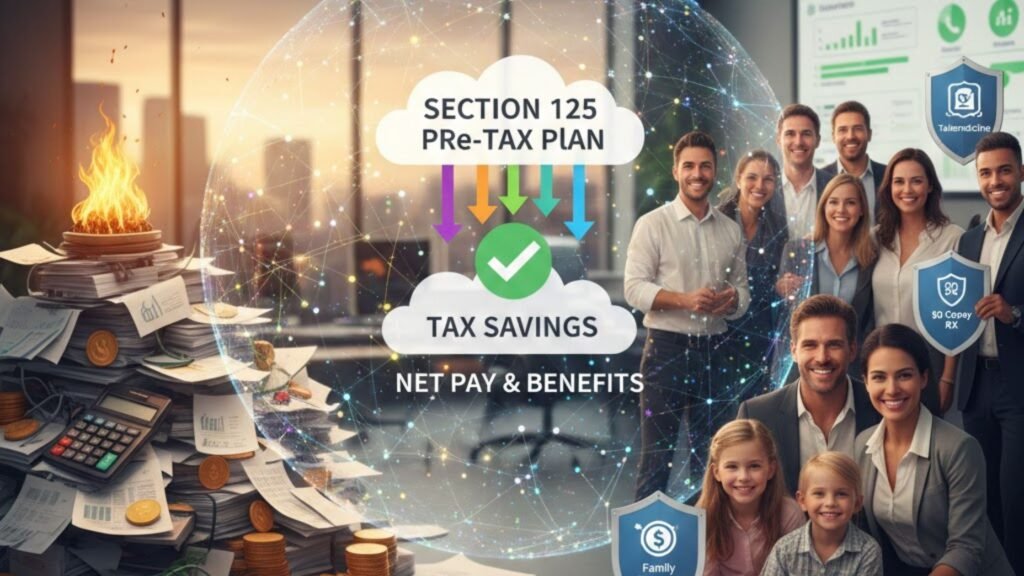
A tax-advantaged benefit plan under Section 125 allows employees to pay for approved benefits before taxes are taken from their paycheck. Because those deductions happen before federal income tax, Social Security, and Medicare taxes are applied, taxable wages go down.
That creates savings on both sides.
Employees often see a little more net pay because less income is taxed. Employers save because payroll tax liability drops as taxable wages decrease across the workforce.
This is why terms like IRS Code 125 cafeteria plan and 125 cafeteria plan IRS come up often when employers start reviewing benefit strategies. The tax advantage is the main reason these plans continue to stay popular.
Why Employers Pay Attention to IRS Rules
The tax benefit only works when the plan follows IRS 125 cafeteria plan rules correctly.
The IRS requires a formal written plan document. Employers cannot just decide to deduct benefits pre tax without that structure in place. The plan has to be explained clearly:
- What benefits are included
- Who is eligible
- How elections work
- When employees can make changes
- What counts as a qualifying event
Without that written framework, deductions can lose their protected tax status.
That is where many businesses realize this is not something to handle casually. A compliant setup matters because payroll reporting, benefit elections, and documentation all have to line up.

What Employees Can Usually Include
A properly built IRS cafeteria 125 plan often includes benefits tied to health and family support.
Common eligible options may include:
- health related benefit deductions
- certain insurance costs
- dependent care options
- approved supplemental coverage
The key is that every included benefit must meet Section 125 eligibility standards.
In some payroll systems, employees notice this under labels such as h125 deduction, which simply refers to the pre tax deduction connected to the plan.
A lot of employees see that deduction without fully understanding why it matters. In practice, it often means they are participating in a structure that lowers taxable income while funding approved benefits.
Why Qualifying Events Matter
One area employers often overlook is Section 125 qualifying events.
Employees cannot freely change elections whenever they want. Once they choose benefit elections during enrollment, those choices usually stay fixed unless a qualifying event happens.
Typical qualifying events include:
- marriage
- divorce
- birth of a child
- adoption
- loss of other coverage
- major employment status changes
This rule exists because the IRS wants consistency. If elections changed constantly, the tax structure would become harder to regulate.
For employers, this means HR teams need clear procedures so benefit changes happen only when the event qualifies under plan rules.
Why More Employers Use These Plans Now
Healthcare costs continue to rise, and many employers are looking for practical ways to offer support without adding another major expense.
That is one reason cafeteria plan 125 IRS structures keep showing up in benefit conversations. They help reduce tax waste while making benefits feel more valuable to employees.
For many companies, the appeal is simple:
- Payroll taxes can decrease
- Employees often keep more take home pay
- benefits become easier to justify financially
A plan like this can feel especially useful for businesses trying to stay competitive in hiring while managing overhead carefully.
Where Health Sphere Fits In
Health Sphere works with employers that want this structure handled in a practical way rather than as another complicated HR burden.
The reason many businesses look for outside help is that compliance matters just as much as savings. A plan may look attractive on paper, but if documentation, payroll setup, and enrollment are messy, the tax benefit can create headaches later.
That is why employers often want support that covers both the benefit side and the rule side.
Why Family Benefits Matter More Than Employers Expect
One thing many employers miss when comparing benefit models is how strongly employees respond when family coverage is included.
A plan built around flexible, tax advantaged benefits becomes far more valuable when employees know support extends beyond just them.
That includes benefits such as:
- telemedicine access for spouses and dependents
- counseling support for family members
- prescription access with low or zero copays
- Life insurance support tied to household protection
When benefits touch the family, employees usually see them as real value instead of another payroll line item.

The Bigger Picture for Employers
The strongest reason employers keep exploring 125 cafeteria plan IRS strategies is that they solve two problems at once.
They lower tax exposure while improving benefit value.
That combination matters because employees notice better support, while employers see financial efficiency that does not require raising wages just to stay competitive.
For businesses thinking about long term workforce retention, a properly structured IRS Code Section 125 cafeteria plan often becomes less about tax mechanics and more about building a benefit system that actually works.
If you are reviewing whether a compliant Section 125 strategy makes sense for your workforce, Health Sphere can help you understand what fits, what qualifies, and how to make it work without adding unnecessary complexity.
FAQs
What are the main IRS 125 cafeteria plan rules employers must follow?
The first thing employers need is a written plan. That is not optional. If there is no formal document, the tax advantage can fall apart fast. The plan also needs clear enrollment rules, clear benefit elections, and a process for handling changes only when the IRS says a qualifying event actually counts.
What benefits are allowed under an IRS cafeteria 125 plan?
A lot of employers assume it only covers basic health deductions, but it can go further than that. Depending on how the plan is built, it may include eligible health benefits, certain insurance costs, dependent care support, and other approved pre tax options that fit within Section 125 rules.
Can employees change their Section 125 elections whenever they want?
Usually no. Once an employee makes an election, that choice stays in place until a real qualifying event happens. That could be marriage, divorce, having a child, adoption, or losing other coverage. The IRS keeps this tight because the tax side only works when changes stay controlled.
Why do employers keep using Section 125 plans year after year?
Because the math keeps making sense. Employers lower payroll tax exposure, employees often keep a little more in their paycheck, and benefits feel stronger without forcing the company to spend wildly more. When it is set up right, it solves more than one problem at once.