If you run a business, you already know the balancing act. Take care of employees, but keep costs under control. That is where cafeteria 125 plan deductions come into the picture. Done right, they let employees access real benefits while businesses reduce payroll tax pressure at the same time.
The problem is that many employers hear about Section 125 plans but never fully understand how the deductions actually work. What qualifies, what does not, and how those deductions affect payroll and taxable wages can feel confusing at first.
This guide explains it in plain language, showing how these deductions work and why more companies use them to offer better benefits without adding unnecessary costs.
Understanding Section 125 Pre-Tax Benefits
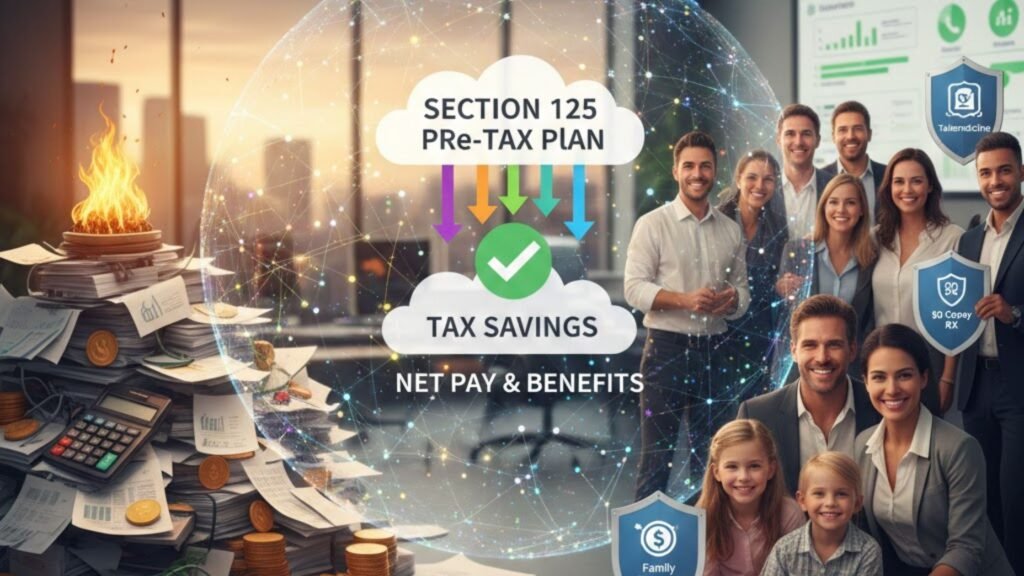
A Section 125 framework lets employees pay for certain benefits before taxes ever touch their paycheck. That means federal and sometimes state taxes skip that money entirely. Employees love it, and businesses see real savings on payroll taxes through Section 125 pre-tax benefits.
Traditional cafeteria plan options give employees choices. They pick what fits their life and their family best. Common offerings include medical, dental, vision, life insurance, mental health support, telemedicine, and dependent care. Companies using Health Sphere watch employees get coverage for themselves and their families while the business saves money at the same time.
The tricky part is knowing what counts. Not every dollar you spend on benefits qualifies as cafeteria 125 plan deductions. Get it wrong, and you miss out on serious savings.

What Counts as Qualifying Deductions
Here is what actually counts as a 125 cafeteria plan deduction:
Health insurance premiums
The Section 125 pre-tax structure often includes employee contributions to group health plans such as family coverage.
Dependent care and flexible spending accounts (FSAs)
Money set aside for childcare or certain medical expenses is deducted pre-tax.
Group term life insurance
Coverage up to $50,000 generally qualifies. Many companies prioritize this because it is a high-value benefit that employees and their families notice.
Health Savings Accounts (HSA) contributions
Employees can fund HSAs with pre-tax dollars. It makes healthcare more manageable and lowers taxable income.
These deductions come straight out of paychecks, lowering taxable wages without hurting take-home pay. Not every benefit fits neatly under Section 125 rules, so setting it up carefully is key.
Comparing Deduction Amount vs Actual Cost
Employers often ask about the 125 cafeteria plan deduction amount vs actual cost. Here’s the deal: the deduction is what comes out of the employee’s paycheck pre-tax. The actual cost is what your company pays to fund and run the plan.

For example, when an employee opts to take family medical insurance through a traditional cafeteria plan, the pre-tax amount that the employee pays reduces the taxable income. Yet the aggregate cost is that which you pay as the employer. Being aware of this difference helps employers understand how Section 125 cafeteria plan deductions translate into real payroll tax savings and not just numbers on a spreadsheet.
Are 125 Cafeteria Plan Deductions Taxable
Another frequent question is are 125 cafeteria plan deductible as taxable wages for cities or local taxes. In the majority of cases, pre-tax contributions lower the federal and state taxable wages. There is variance on local taxes, and therefore, they have to be appropriately arranged and reported in accordance with the Section 125 framework.
An efficiently managed Sec 125 plan ensures that deductions are not lost and employees are not faced with any unexpected income that is subject to taxation.
Benefits Beyond the Numbers
It is easy to focus only on tax savings, but employees care about what they actually get. Section 125 pre-tax benefits let employees cover themselves and their families with almost no out-of-pocket costs. Typical perks include:
- 24/7 Telemedicine and Virtual Care
- Mental Health and Counseling Services
- Employee Assistance Programs (EAP)
- Family Coverage with multiple annual care visits
- Group Term Life Insurance
- Discounts on Vision, Dental, and Prescriptions
- $0 Copays for prescriptions and urgent care
These benefits do more than make employees happy. They help with retention and recruitment. People notice when a company covers their family and makes healthcare easy to access.
Why Employers Should Care
Employers win too. Cafeteria 125 deductions can reduce payroll taxes by 5 to 10 percent per employee. Health Sphere’s Revive and Thrive plans show real numbers. Depending on the plan, businesses can save hundreds to over a thousand dollars per W2 employee each year. That frees up money for the business while giving employees real benefits at $0 copay.
Setting Up a Section 125 Plan
Setting up 125 plans does not have to be complicated. Start with:
- Identifying eligible benefits under the Section 125 rules
- Calculating pre-tax contributions and understanding the deduction versus the actual cost
- Communicating with employees so they know how to enroll and what is covered
- Ongoing administration to ensure compliance and maximize savings
Companies that do this right not only save money but also make employees feel valued with full, family-focused coverage.

Takeaway
Understanding qualifying deductions for section 125 cafeteria plan benefits is essential for any employer that wants to cut costs while offering meaningful benefits. Section 125 pre tax benefits reduce taxable wages, cover employees and their families, and deliver savings employers can see on the bottom line.
If your business wants to simplify benefits, maximize tax savings, and make employees happy, Health Sphere can help you set up a plan that actually works.
Boost employee benefits and save on taxes with Health Sphere.
FAQ
What deductions qualify under a Section 125 cafeteria plan?
The usual ones are health insurance premiums, flexible spending accounts, dependent care contributions, and certain group life insurance benefits. These come out before taxes hit the paycheck. Simple idea. Employees have lower taxable income. Employers trim payroll taxes. Both sides walk away with real value.
Are all employee benefit deductions eligible for Section 125 pre-tax treatment?
No. That is where many employers get confused. Only certain benefits qualify under the Section 125 rules. Health coverage and care-related expenses often make the cut. Others do not. The key is proper plan setup so deductions stay compliant and no one runs into tax surprises later.
How do Section 125 deductions affect employee take-home pay?
Here are the parts employees like. The deduction happens before taxes. That lowers taxable income. Lower taxable income means less tax taken out. So employees can access benefits like healthcare or family coverage without feeling like their paycheck suddenly shrank.
Why do many employers choose Section 125 cafeteria plans?
Because the math makes sense. Employers cut payroll tax costs. Employees get meaningful benefits. Healthcare support, family coverage, wellness services. All in one setup. It is practical, efficient, and honestly one of the simplest ways to upgrade benefits without blowing up the budget.