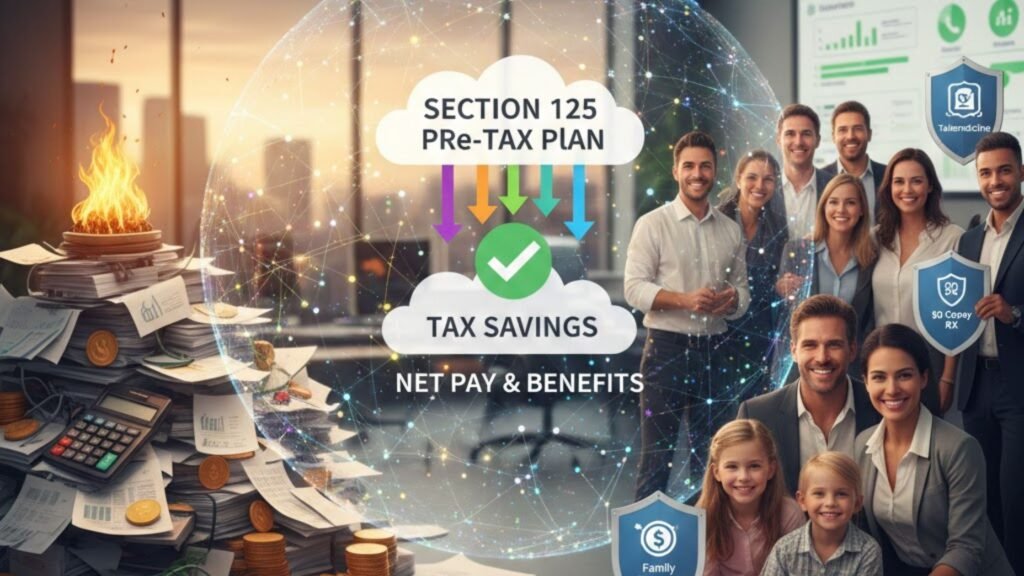
Most employers like the idea of a Section 125 plan. Payroll tax savings make sense. Better benefits without spending more makes sense. Where things start to feel messy is compliance. IRS rules, payroll deductions, and documentation scare people off before they even get started.
The truth is, managing a 125 cafeteria plan IRS compliant way is not complicated when it is structured correctly. The problems usually show up when employers try to cut corners or run it without a professional setup. When done right, a Section 125 plan becomes one of the cleanest ways to reduce tax waste and improve employee benefits at the same time.
This comes down to understanding how cafe 125 deductions work, what the IRS actually requires, and how the right plan design fits into payroll without disrupting what you already have in place.
Understanding IRS Requirements Without Overthinking Them
A Section 125 cafeteria plan allows employees to choose certain qualified benefits and pay for them with pre-tax dollars. That pre-tax treatment reduces taxable wages, which lowers payroll taxes for employers and increases take-home value for employees.
The IRS is not trying to stop businesses from doing this. Section 125 exists because the government allows it. What the IRS does care about is structure and documentation. A compliant plan must be established in writing, adopted by the employer, and administered consistently.
Most issues come from informal setups. Employers offering pre-tax benefits without a written plan. Payroll deductions are being handled inconsistently. Employees are not properly enrolled. Those are the things that trigger compliance problems, not the plan itself.
Why Payroll Deductions Matter More Than the Plan Name
Health 125 deduction are the backbone of compliance. This is where everything shows up on payroll, W-2s, and tax filings. If deductions are coded incorrectly or handled inconsistently, the entire plan can be questioned.
When payroll is handled properly, Section 125 deductions reduce FICA liability for the employer and the employee. Those savings are accruing rapidly over time, particularly for companies with a larger number of workers.
The key is accuracy and consistency. Every election must be documented. Every deduction must be calculated correctly. When that happens, payroll stays clean, and audits become far less stressful.
Where Plan Design Actually Makes a Difference
Not all Section 125 plans deliver the same value. Some technically meet IRS rules but fail in real life because employees do not use the benefits. When participation is low, savings drop. When savings drop, employers lose interest.
Plans like Revive and Thrive are designed to avoid that problem. They focus on benefits employees actually care about and use, while staying fully compliant within a Section 125 framework.
Here is the only place in this blog where bullets belong, so everything is clear and easy to scan.
Revive and Thrive Plan Highlights
- Employer savings of approximately $1,100 per W-2 employee per year with Revive
- Employer savings of approximately $600 per W-2 employee per year with Thrive
- An estimated 5 to 10 percent reduction in overall healthcare costs
- 24/7 telemedicine and virtual care for employees and families
- Spousal and dependent coverage is included by default
- Employee Assistance Program with mental health and counseling support
- Mayo Clinic programs and wellness resources
- Group term life insurance valued at roughly $60 to $100 per month under Revive
- RX coverage with zero copays
- In-person urgent care access
- All benefits are provided at $0 copay
Every benefit applies to the employee and their family. No hidden tiers. No surprise costs.

Why Employees Actually Enroll in These Plans
One of the biggest reasons Section 125 plans fail is employee confusion. When individuals fail to know what they are receiving and its importance, they fail to enroll. The low enrollments render the plan unable to operate as it ought to.
Revive and Thrive avoid that by being simple and tangible. Zero copays. Family coverage included. Real-life insurance. Mental health support without hoops. Employees feel the value almost immediately, which drives participation and keeps the plan healthy.
Staying Compliant Without Making Payroll Harder
A 125 cafeteria plan IRS audit usually focuses on a few predictable areas. Is there a written plan. Are benefits eligible? Are deductions handled correctly? Is everything documented?
When the plan is set up and managed properly, these questions are easy to answer. Payroll stays clean. Reporting stays accurate. Employers can confidently claim their tax savings without worrying about clawbacks later.
This is the reason why it is preferable to work with a well-organized solution. It eliminates guesswork and makes compliance part of the process rather than a consideration.
Final Thoughts
Managing a Section 125 plan does not have to feel risky or complicated. When IRS requirements are respected, and cafe 125 deductions are handled correctly, the plan does exactly what it is supposed to do. Reduce tax waste. Improve benefits. Strengthen retention.
Solutions like Revive and Thrive make that possible without adding cost or complexity. Offered through Health Sphere, they turn compliance into an advantage instead of a concern.
If you are going to offer a Section 125 plan, the smartest move is to do it right from the start. When structure, payroll, and benefits all align, everyone wins.
Talk to an Expert, Book a Consultation!
FAQs
What is a Section 125 cafeteria plan?
It lets employees pay for certain benefits with pre-tax dollars, which lowers taxes and stretches their paycheck further.
Are Section 125 payroll deductions actually IRS compliant?
Yes, as long as the plan is set up properly, documented correctly, and payroll deductions are handled the right way.
Do employees or their families pay anything out of pocket?
No. The benefits included are zero copay, including prescriptions, and apply to the employee and their covered family.
Will this interfere with our current health insurance plan?
No. It runs alongside existing coverage and does not replace or disrupt your current health insurance setup.